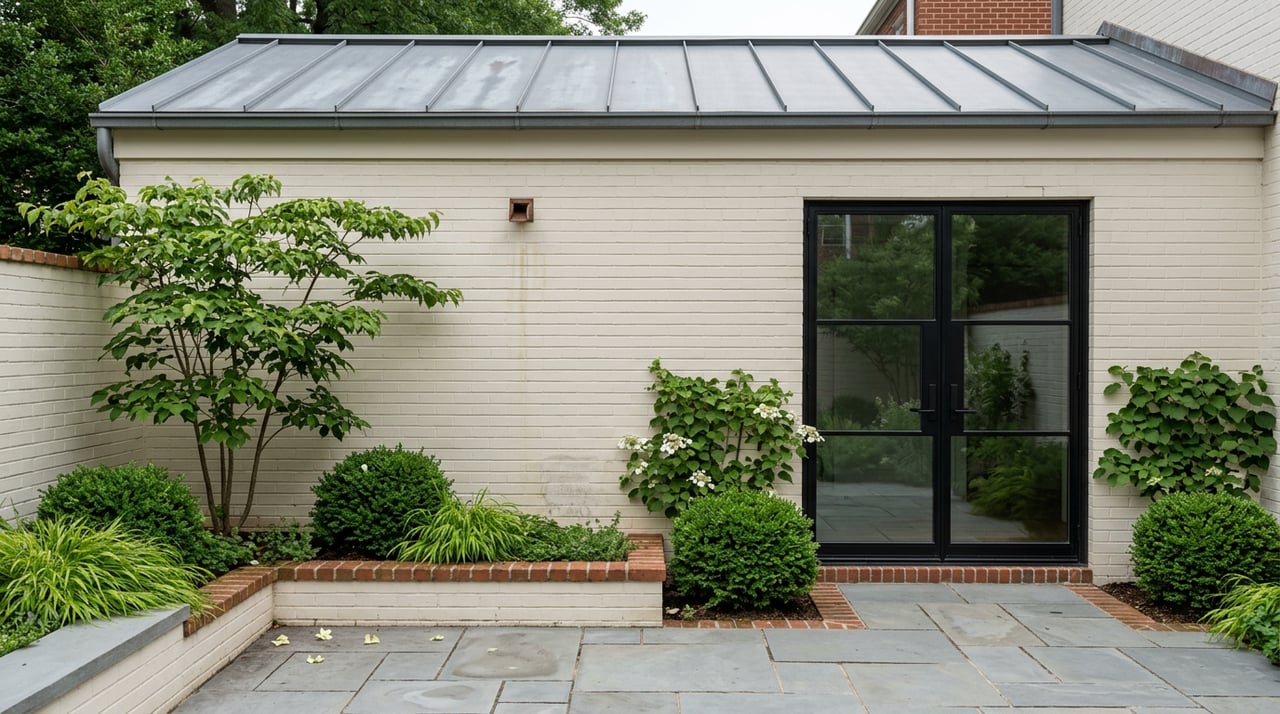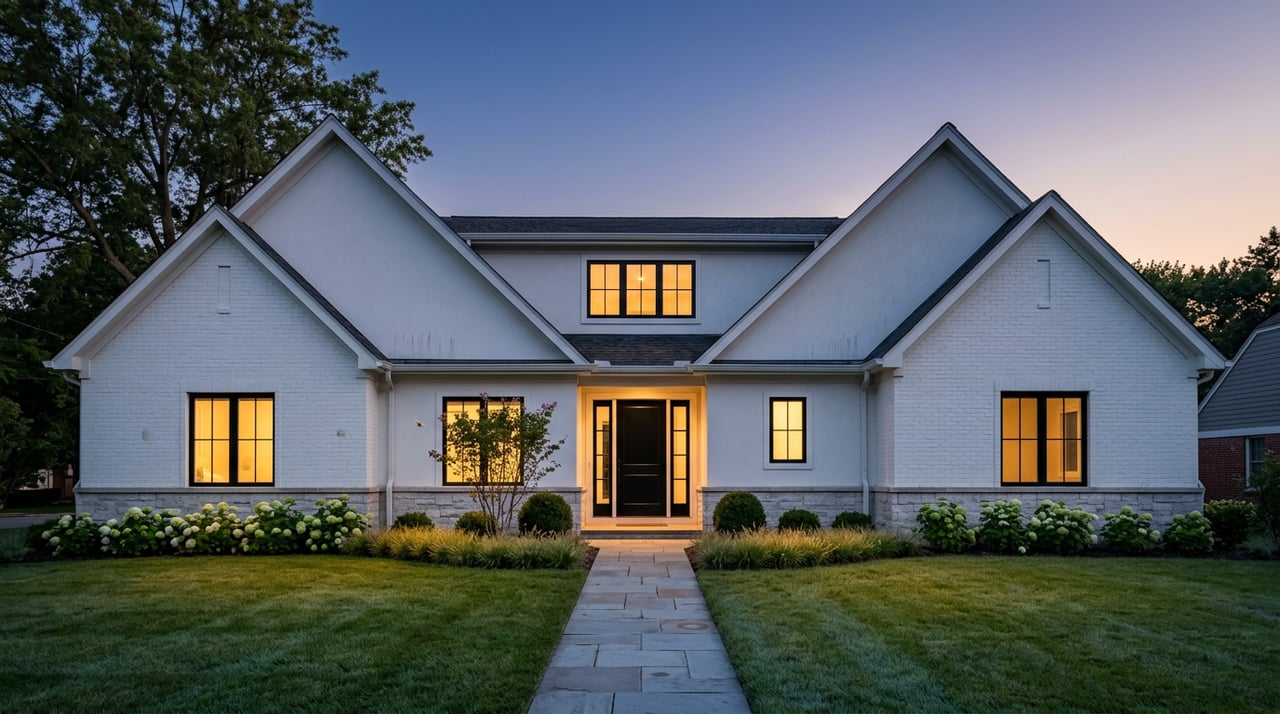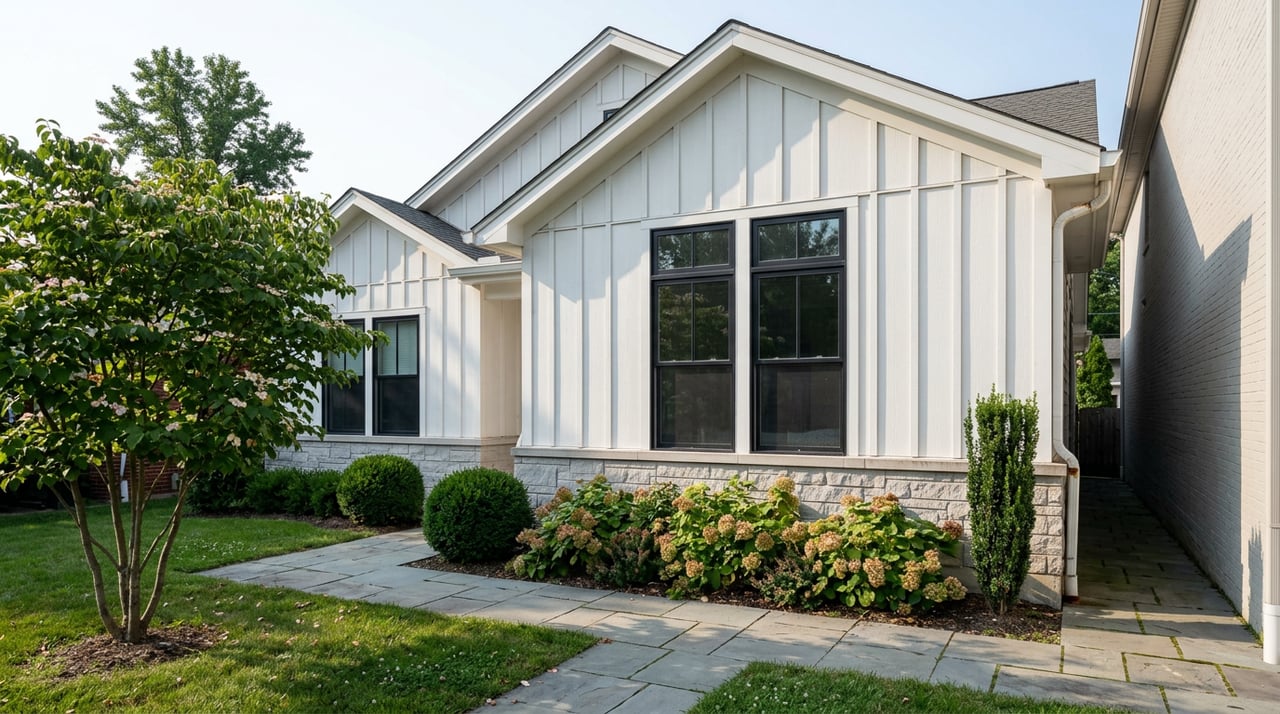
Why would two lots in the same city, both reassessed within weeks of each other, price their land so differently that the smaller one comes out nearly twice as expensive per square foot? That is the question a handful of Falls Church City buyers and owners have been asking since assessment notices went out in March 2026, and the answer has less to do with location than with a formula the City has never fully explained.
Falls Church City covers just over two square miles, and within that footprint sit two very different kinds of residential lots. Older quarter-acre parcels in neighborhoods like Greenway Downs, Ellison Heights, and Fowler's Addition have become the City's preferred hunting ground for teardown and rebuild projects. A few blocks away, in pockets like Broadmont and Hillwood, brick colonials sit on noticeably larger parcels that rarely change hands for land value alone. Both kinds of lots get assessed the same way, under the same state law, by the same office. But the math underneath that assessment does not treat them the same, and understanding why changes how a buyer should think about a teardown candidate versus a larger, more established lot.
The Formula the City Describes and the One That Actually Runs
The Falls Church City Assessor's office describes its land valuation approach in plain terms: land is priced per square foot, and larger or smaller lots see their value adjust proportionally. The City's own language calls this a principle of diminishing returns, the implication being that buying more land simply comes with a volume discount, the way a bigger bag of rice costs less per pound.
An independent analysis by Falls Church Pulse, a local publication that purchased the City's detailed assessment data files to study the methodology directly, found something different. Rather than a straightforward volume discount, the land pricing curve behaves as if the City is amortizing a large, fixed base fee, which Pulse calculated at $435,000 in 2025, across the size of each lot. A bigger lot spreads that fixed cost over more square footage, so its per-square-foot number drops. A smaller lot spreads the same fixed cost over far less land, so its per-square-foot number spikes. It is not that big lots get a discount. It is that small lots absorb a cost that does not shrink with them.
The practical gap this produces is large. Based on 2025 assessment data, Pulse found that lots under 6,000 square feet, roughly a seventh of an acre, were priced above $90 per square foot of land. Lots over 20,000 square feet, closer to half an acre, priced under $46 per square foot.
| Lot size | Land value (2025, per sq ft) |
|---|---|
| Under 6,000 sq ft | Over $90 |
| Over 20,000 sq ft | Under $46 |
That is not a rounding difference. It means the land under a small, teardown-ready lot in Falls Church City can carry close to double the per-square-foot cost of the land under a larger parcel just a few streets away, even before either owner touches a shovel.
Where the Divide Actually Sits on the Map
This is not an abstract statistical curve. It maps onto real neighborhoods that buyers already compare against each other. Greenway Downs, known for its Cape Cods and bungalows, along with Ellison Heights near the West Falls Church Metro and Fowler's Addition, has seen the most consistent teardown activity in the City, with older homes on quarter-acre lots giving way to new construction that maximizes the buildable footprint. These are exactly the small-lot neighborhoods where the fixed-fee effect bites hardest.
Contrast that with Broadmont and Hillwood, where brick colonials sit on more generous lots, or Virginia Forest and Tyler Park, which mix renovated originals with newer construction on parcels that rarely qualify as small by the City's own curve. A buyer comparing a modest rambler on a 5,500 square foot lot in Greenway Downs against a larger property on a 22,000 square foot lot in Hillwood is not just comparing square footage. They are comparing two entirely different points on a pricing curve that penalizes the smaller parcel disproportionately.
The 2026 Reassessment Made the Gap Hard to Ignore
This dynamic has been building for years. Falls Church Pulse's analysis found that land values for detached single-family lots rose 46 percent between 2019 and 2025, and by 2025, land alone accounted for more than half the total assessed value of a typical detached single-family home in the City.
The 2026 reassessment, mailed to property owners beginning March 13, 2026, brought the pattern into sharper focus. Citywide, single-family home assessments rose 8.1 percent over the prior year. But that average masked wide variation underneath it. Falls Church Pulse's neighborhood-level breakdown found that median assessment growth for detached single-family homes ranged from as low as 0 percent to as high as 15 percent depending on the neighborhood, and about a third of detached single-family owners saw increases of 10 percent or more.
The City's overall increase also stood out against its neighbors. According to figures the City Manager presented at the March 23, 2026 budget meeting, Falls Church City's residential assessment growth ran nearly double Arlington's, where nearby properties saw increases in the 2 to 3 percent range, and well above Fairfax County's Dranesville district, which includes McLean and Tysons and posted a 4.9 percent average increase for the same cycle. A city built almost entirely on small, tightly platted lots is going to feel a fixed-fee land model more acutely than a jurisdiction with more room to spread that cost across bigger parcels, and the 2026 numbers bear that out.
What This Means If You're Weighing a Teardown Against a Larger Lot
For a buyer or developer evaluating a small lot in Greenway Downs, Ellison Heights, or Fowler's Addition as a teardown candidate, the land itself is not the bargain it might look like on a price-per-square-foot basis compared to a larger property elsewhere in the City. The fixed-fee curve means that entry price is already carrying a land cost premium that a bigger lot two neighborhoods over would not.
That does not make the smaller lot a bad decision. Location, school-district uniformity across the entire City, and buildable envelope still matter enormously, and Falls Church City's compact footprint means every property benefits from the same walkable downtown and municipal identity regardless of lot size. But it does mean the renovate-versus-rebuild math on a small lot needs to account for a land cost that will not decline just because the parcel is modest.
It also compounds with the practical mechanics of building in the City. Falls Church City runs its own permitting and inspections through its Building Safety Division and Zoning Division at City Hall on Park Avenue, separate from Fairfax County. For a significant renovation or new construction project, permitting typically takes about 10 to 15 weeks from application to issuance, and permit fees for larger projects commonly fall in the $12,000 to $16,000 range. Zoning in the City is strict, with setback requirements, lot coverage maximums, and height limits that hit tight lots harder than generous ones, and any project needing relief goes through the City's Board of Zoning Appeals. Stack a premium land cost on top of a tighter zoning envelope and a multi-month permitting timeline, and a small lot's economics look different than the sticker price suggests.
For sellers holding an older home on a larger lot in Broadmont, Hillwood, or a similar pocket, the same curve works in their favor. Their land is priced more efficiently per square foot, and as land values continue to make up a growing share of total assessed value, that efficiency is worth understanding before pricing a listing or fielding a builder's offer.
A Few Questions Worth Settling Before You Offer
Does a bigger lot always mean a better per-square-foot deal? Based on the City's own 2025 data, yes, larger lots consistently price lower per square foot of land than smaller ones. That does not mean a bigger lot is always the right purchase. Location, condition of the existing structure, and what you actually intend to build still drive the decision. The land curve is one input, not the whole answer.
Is this fixed-fee pattern unique to Falls Church City? Virginia law requires every jurisdiction to report land and improvement values separately, but the specific shape of Falls Church City's curve, with a large fixed cost amortized across lot size, is what Falls Church Pulse's data analysis surfaced for this City specifically. Whether neighboring jurisdictions use a similar structure was outside the scope of what has been published so far.
What should I ask for before making an offer on a teardown-candidate lot? Request the property card and cost model sheet for the specific parcel, which break out how the City arrived at its land and improvement figures. Comparing those documents against a similarly sized lot in a different neighborhood will tell you more about your actual land cost than the list price alone.
Falls Church City's small size is part of what makes it desirable. It is also exactly why its land pricing curve behaves the way it does, rewarding scale in a place where scale is scarce. If you are weighing a teardown lot against a larger parcel, or trying to figure out what your own land is really worth before you list, that is a conversation worth having with someone who understands both the construction economics and the City's numbers.
Charisse McElroy and the team at REP Real Estate Partners pair local assessment knowledge with in-house design and construction expertise, which means the renovate-versus-rebuild math gets worked out before you are under contract, not after. Request a Concierge Consultation to walk through what a specific Falls Church City lot is actually worth building on.