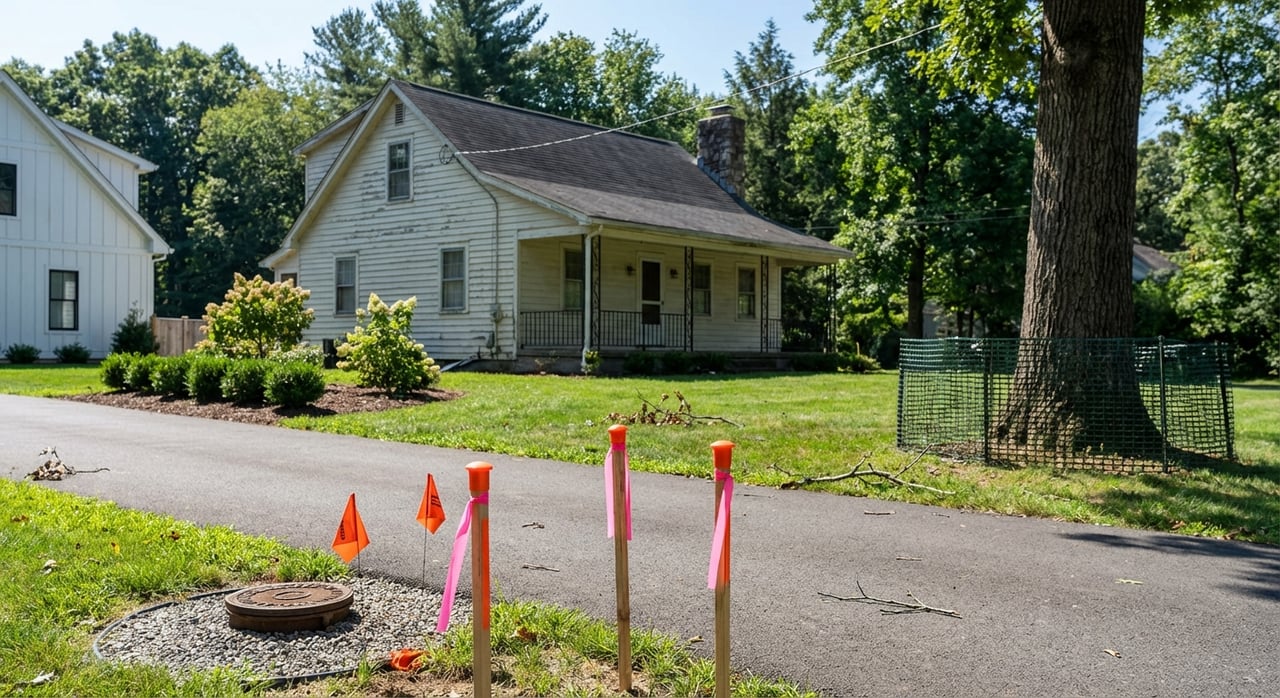
Thinking about buying a lot or teardown in Great Falls but not sure where to start? You’re not alone. The area’s large parcels and custom homes are a big draw, yet the path from land to dream home runs through zoning, utilities, septic, and site rules that can make or break a deal. In this guide, you’ll learn how to evaluate a parcel, what costs to watch, and the steps that keep you on track. Let’s dive in.
Why Great Falls lots stand out
Great Falls offers a low‑density, estate‑style setting with many parcels in the 1 to 3 acre range. That scale gives you privacy, design flexibility, and room for outdoor living. Inventory of turnkey luxury homes can be tight, so buyers often look to teardowns or raw land for a custom build. Before you get attached to a lot, it pays to verify what you can actually build and how utilities will work.
How to evaluate a Great Falls parcel in 10 steps
- Confirm zoning and overlays
- Use Fairfax County’s Zoning Ordinance and the county’s zoning tools to verify the parcel’s district, setbacks, and any overlays that restrict development. Many Great Falls lots fall in larger‑lot districts like R‑E or low‑density R‑1 and R‑C. Confirm the exact district and any Resource Protection Area, floodplain, or historic overlay before you assume a buildable footprint. See the county’s Zoning Ordinance overview to get oriented and request guidance as needed. Fairfax County Zoning Ordinance
- Check sewer availability
- Fairfax County considers public sanitary sewer “available” to a single‑family home when a main is within about 300 feet of the building. If the property lies outside the Approved Sewer Service Area or the main is farther away, an extension can require a formal process with uncertain outcomes. Verify location, depth, and capacity with the Wastewater division and review as‑builts if available. Connect to the public sanitary sewer system
- Verify public water or plan for a well
- Some Great Falls parcels are on Fairfax Water, while many larger or more rural lots rely on private wells. Use the county’s GIS Water Service Areas layer to see if the property sits inside a service polygon. If not, expect to drill a well or fund a water‑main extension. Water Service Areas layer
- Confirm septic feasibility and perc status
- For lots without public sewer, septic feasibility is a go/no‑go issue. Fairfax County’s Health Department requires a site and soil evaluation and a private soil scientist’s work for new or expanded systems. Lots marketed as “perc approved” or with a certified septic design are stronger candidates; without that, budget for testing and the possibility of an alternative system. Onsite sewage and private wells
- Screen for RPAs and floodplain
- The Chesapeake Bay Preservation Ordinance designates Resource Protection Areas along streams and water features with 100‑foot buffers. Building, clearing, and grading inside RPAs are tightly regulated and often require waivers or mitigation. These constraints can reduce your buildable area or add time and cost to your plan. Chesapeake Bay Preservation Ordinance
- Understand land‑disturbance thresholds
- Disturbing 2,500 square feet or more triggers County land‑disturbance permits and stormwater/erosion control plans. The threshold counts work zones and access paths, not just the house footprint, so most teardowns and new builds will need a formal site plan submission. Land disturbance overview
- Anticipate soils, rock, and slopes
- Great Falls sits near the Potomac/Piedmont Fall Line, so shallow bedrock, cobbles, or blocky soils can show up on some sites. That can increase foundation, excavation, and blasting costs or steer you toward specific septic designs. Plan for a geotechnical investigation early. Local geology context
- Order a current survey/plat
- A recent House Location Plat helps verify setbacks, easements, access, and actual buildable envelope. Many County submissions and any RPA waiver work will require a plat. It also surfaces practical issues like pipestem lots or unusual easements that could affect design. RPA vegetation removal guidance
- Map out site access, grading, and stormwater
- A civil engineer can help you sketch driveway geometry, grading limits, and stormwater best management practices. Expect to coordinate with VDOT for work in a state right‑of‑way and to budget for erosion controls, stormwater features, and tree protection during construction. Land disturbance overview
- Build a conservative budget
- In higher‑end Northern Virginia markets, land can represent roughly 20 to 40 percent of an all‑in custom home budget. High‑end custom builds often range from the mid‑$300s to $700+ per square foot depending on finishes and site complexity, with site work, septic or sewer connections, and rock excavation adding tens to hundreds of thousands. Use ranges and get builder bids tied to a specific parcel and plan. Custom home cost context | Virginia build cost ranges
Lots vs teardowns: the project math
When you consider a teardown versus a raw lot, compare total all‑in costs and your margin to market value. A simple way to frame it is land share and site premium.
- Land share example: If a finished custom home would sell for about 2.4 million dollars and land typically accounts for around 30 percent, a realistic land target might be about 720,000 dollars before site work. That is a rough guide; always validate with local comps and usable buildable area.
- Site premium: On complex Great Falls sites, tree preservation, stormwater controls, long driveways, and rock excavation can materially raise costs. A parcel that appears cheaper can become more expensive than a pricier lot with easier utilities and soils. Use builder estimates and engineer input before you remove contingencies. Custom home cost context | Virginia build cost ranges
Utilities and perc: the biggest swing factor
Public sewer and water shape feasibility and cost. The County treats sewer as available if a main is within about 300 feet of the house. If the parcel is outside the Approved Sewer Service Area or farther from the main, extensions usually require a County process with low odds in most cases outside health hazards. Confirm practical availability, main depth, and capacity with the Wastewater division early. Sewer availability rules
For water, verify whether Fairfax Water serves the lot using the County’s GIS layer. If the lot is outside the service area, you will likely drill a private well or fund a main extension. Private well and septic design both run through the Health Department, and new systems require site and soil evaluation. Lots marketed as “perc approved” are safer because they have verified soils and layout. Without recent perc data, plan for soil testing and the potential need for an alternative system. Water service areas | Septic and well permits
Timelines and permitting basics
Plan your schedule with County review in mind. Small vegetation removals or minor RPA waivers often go through an administrative review that can be quick if the package is complete, sometimes in about five business days. Larger footprints, new home sites, or any disturbance at or above 2,500 square feet will require formal site plans and stormwater management submissions through the County’s PLUS system, which builders often budget in months, not weeks. Coordinate your survey, soils, and civil engineering so your submissions are complete the first time. RPA waiver guidance | Land disturbance overview
Common red flags to watch
- No recent perc/soil report or geotechnical investigation. This is a primary feasibility gate for septic and foundation design. Septic and well permits
- Heavy RPA constraints or floodplain coverage that push the buildable envelope into difficult or expensive areas. Chesapeake Bay Preservation Ordinance
- Sewer or water extensions with unclear cost or low likelihood of approval, especially outside the ASSA. Sewer availability rules
- Shallow bedrock and rock excavation risk that can blow past budget. Local geology context
- Tree preservation or mitigation requirements that significantly restrict footprint or add cost. RPA vegetation removal guidance
Quick buyer checklist
- Zoning: Confirm district, setbacks, and overlays. Zoning Ordinance
- Sewer and water: Verify proximity and service area. Sewer availability rules | Water Service Areas layer
- Septic: Ask for recent perc/soil reports and any approved designs. Septic and well permits
- Survey: Order a House Location Plat to confirm buildable area and easements. RPA guidance
- Site work: Budget tree work, grading, stormwater, driveway, and rock. Land disturbance overview
- Project math: Use conservative land share and per‑square‑foot ranges until you have builder bids. Custom home cost context | Virginia build cost ranges
Your next move
If a Great Falls lot or teardown is on your radar, bring in a team that lives this process every week. Our boutique, principal‑led approach pairs deep local relationships with hands‑on construction know‑how, so you get clear answers on zoning, utilities, site costs, and resale value before you commit. To map your path with confidence, connect with Charisse McElroy for a concierge consultation.
FAQs
What zoning rules apply to Great Falls lots?
- Many Great Falls parcels fall in larger‑lot districts like R‑E or low‑density R‑1 and R‑C, but you should verify the exact district, setbacks, and any overlays with the County’s zoning resources before finalizing plans. Zoning Ordinance
How do I check if public sewer is available for a Great Falls property?
- Fairfax County considers sewer “available” when a main is within about 300 feet; confirm main location, depth, and capacity with the Wastewater division and whether the lot lies inside the Approved Sewer Service Area. Sewer availability rules
What is a Resource Protection Area and why does it matter for building?
- RPAs are protected buffers around streams and water features; building, clearing, and grading inside them are restricted and may require waivers or mitigation that affect timeline, footprint, and cost. Chesapeake Bay Preservation Ordinance
Do I need a perc test for a Great Falls teardown without public sewer?
- Yes. Septic feasibility hinges on site soils verified through a private soil scientist and Health Department review; lots marketed as “perc approved” are safer, while others require testing that can change design and cost. Septic and well permits
How much does a custom home cost in Northern Virginia?
- High‑end custom builds commonly range from the mid‑$300s to $700+ per square foot depending on finishes and site complexity; land often represents about 20 to 40 percent of total project value. Custom home cost context | Virginia build cost ranges
How long do Fairfax County permits take for new home site work?
- Simple vegetation or minor RPA waivers can be quick if complete, sometimes about five business days, while full site plans and stormwater submissions often take months based on complexity and review queues. RPA waiver guidance